
Halal & Acceptance of Deeds | TMIA
Purity, Halal Sustenance, and Acceptance of Deeds
Hadith, narrated by Abu Hurayrah (RA), records that the Messenger of Allah (peace be upon him) said:
“Indeed, Allah is Pure and accepts only that which is pure. Allah has commanded the believers to do what He commanded the messengers, and He said: ‘O messengers, eat from the good things and work righteousness.’ And He said: ‘O you who believe, eat from the good things which We have provided you.’ Then he mentioned a man who prolongs a journey, disheveled and dusty, raising his hands to the sky saying, ‘O Lord, O Lord,’ while his food is unlawful, his drink is unlawful, his clothing is unlawful, and he has been nourished with the unlawful so how can he be answered?”
(Narrated by al-Bukhari and Muslim)
This Hadith establishes an important connection between lawful consumption, spiritual purity, righteous action, and the acceptance of supplication. At Tehseen e Madina Islamic Assembly (TMIA) Calgary, this narration is studied to emphasize the role of halal living in strengthening faith and ensuring that deeds are accepted.
This article explores the meaning of Hadith, the concept of purity in Islam, the impact of halal income, and the relationship between lawful sustenance and answered prayers.
Allah is Pure and Accepts Only What is Pure
The Hadith begins with a foundational principle:
“Allah is Pure and accepts only that which is pure.”
The word “Pure” (Tayyib) indicates that Allah is free from all imperfection. When applied to human actions, it refers to deeds that are:
Lawful
Sincere
Free from corruption
Earned through halal means
A deed may appear outwardly righteous, but if it is supported by unlawful income or mixed with insincere intention, its acceptance is affected.
This principle reminds believers that the means used to perform good deeds matter as much as the deeds themselves.
At TMIA Calgary, students learn that purity in Islam includes both inward sincerity and outward lawful conduct.
The Command to Consume Halal
The Hadith references two Qur’anic verses:
“O messengers, eat from the good things and work righteousness.”
“O you who believe, eat from the good things which We have provided you.”
These verses show that both prophets and believers are commanded to consume lawful provisions.
Halal consumption includes:
Lawful earnings
Permissible food and drink
Ethical financial dealings
Avoidance of stolen or fraudulent wealth
Islam teaches that physical nourishment affects spiritual condition. Lawful sustenance supports righteous action.
In Calgary’s diverse economic environment, Muslims are encouraged to ensure that their earnings comply with Islamic guidelines.
The Connection Between Halal Income and Righteous Deeds
The Hadith links lawful consumption to righteous deeds.
When a person consumes halal food and earns lawful income, their worship is strengthened. Their prayer, charity, and fasting are supported by clean provision.
However, if income is gained through prohibited means such as deception, fraud, interest-based transactions, or injustice, it affects spiritual state.
Scholars explain that charity given from unlawful wealth is not accepted because Allah accepts only what is pure.
This principle encourages ethical financial behavior.
The Example of the Traveler
The Prophet (peace be upon him) describes a man on a long journey:
He is dusty and disheveled.
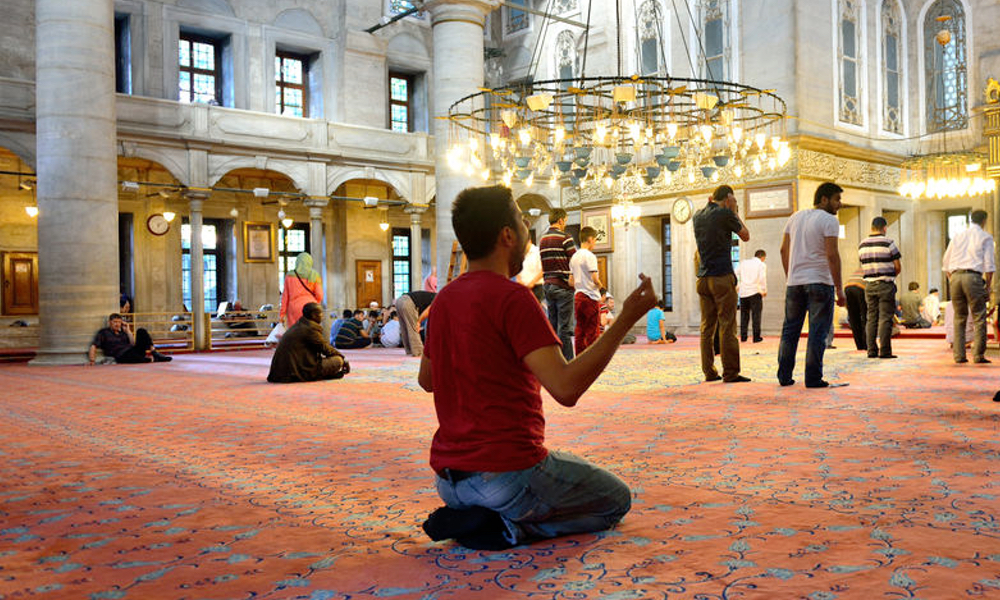
He raises his hands in supplication.
He calls upon Allah with humility.
Travel, hardship, and raised hands are conditions that often increase the likelihood of answered prayers.
Yet, despite these outward signs of humility, his supplication is hindered because:
His food is unlawful.
His drink is unlawful.
His clothing is unlawful.
He is nourished by unlawful means.
The Prophet concludes: “So how can he be answered?”
This example highlights the impact of sustained unlawful consumption on spiritual response.
Does This Mean Supplication is Impossible?
Scholars clarify that Allah may answer the supplication of anyone according to His wisdom. The Hadith does not state absolute impossibility.
However, it teaches that persistent involvement in haram weakens the likelihood of acceptance.
It serves as a warning that believers should remove barriers to spiritual growth.
Repentance restores hope. Turning away from unlawful earnings and correcting one’s conduct reopens the door to acceptance.
The Broader Concept of Purity
Purity in Islam extends beyond food and money.
It includes:
Pure intention (Ikhlas)
Lawful speech
Honest contracts
Clean relationships
Ethical business dealings
A believer strives for consistency between internal sincerity and external action.
At Tehseen e Madina Islamic Assembly Calgary, lessons on Hadith 10 emphasize the importance of aligning income, lifestyle, and worship.
The Relationship Between Means and Ends
Islam rejects the idea that good intentions justify unlawful means.
The end does not justify the means if the means are haram.
For example:
Donating stolen money does not purify the theft.
Performing pilgrimage with unlawful earnings does not remove the sin of dishonesty.
Lawful methods are required for acceptable outcomes.
This ethical framework protects society from moral compromise.
The Role of Halal Income in Modern Life
In modern economic systems, Muslims may encounter complex financial arrangements.
Common concerns include:
Interest-based banking
Unethical investment practices
Fraudulent employment
Misrepresentation in business
Hadith 10 reminds believers to examine their financial practices carefully.
Living in Calgary, Muslims navigate various professional sectors. Awareness of Islamic guidelines ensures that earnings remain lawful.
TMIA Calgary provides guidance sessions addressing financial ethics within Islamic principles.
Strengthening Worship Through Halal Living
Lawful consumption contributes to spiritual clarity.
When a person consumes halal, their heart is less burdened by guilt and conflict.
This enhances:
Concentration in prayer
Sincerity in charity
Consistency in fasting
Humility in supplication
Halal living becomes a foundation for spiritual growth.
Accountability and Personal Responsibility
Hadith emphasizes personal accountability.
Each individual is responsible for examining:
Where their income originates
How their wealth is spent
Whether their consumption aligns with Islamic teachings
This responsibility cannot be transferred to others.
At TMIA Calgary, educational programs encourage reflection and informed decision making.
Repentance and Correction
Islam provides a path for those who have engaged in unlawful earnings.
Repentance includes:
Ceasing the prohibited action
Feeling remorse
Seeking forgiveness
Correcting injustice where possible
When repentance is sincere, Allah forgives.
The Hadith serves as motivation to correct one’s conduct rather than lose hope.
Practical Applications for Muslims in Calgary
Hadith offers several practical lessons:
Ensure income sources are halal.
Avoid dishonest financial practices.
Examine contracts and agreements carefully.
Consume lawful food and drink.
Align intention with action.
By applying these principles, believers strengthen both individual faith and community integrity.
The Relationship Between Halal and Community Well Being
When individuals earn lawfully and spend ethically, the community benefits.
Halal commerce promotes trust.
Honest dealings reduce conflict.
Fair wages support stability.
Islamic economic ethics contribute to social cohesion.
Tehseen e Madina Islamic Assembly Calgary promotes awareness of these values within the community.
Conclusion
Hadith teaches that Allah accepts only what is pure. Lawful sustenance and sincere intention are essential for the acceptance of deeds and supplication.
The narration emphasizes that outward acts of humility are not sufficient if a person persists in unlawful consumption.
Believers are encouraged to examine their income, their spending, and their lifestyle in light of Islamic guidance.
Tehseen e Madina Islamic Assembly Calgary offers regular Islamic classes focused on Qur’an, Hadith, and practical guidance for daily life. Join our sessions to learn about halal living, sincerity, and the principles of Islamic conduct. Contact TMIA Calgary for class schedules and registration details


